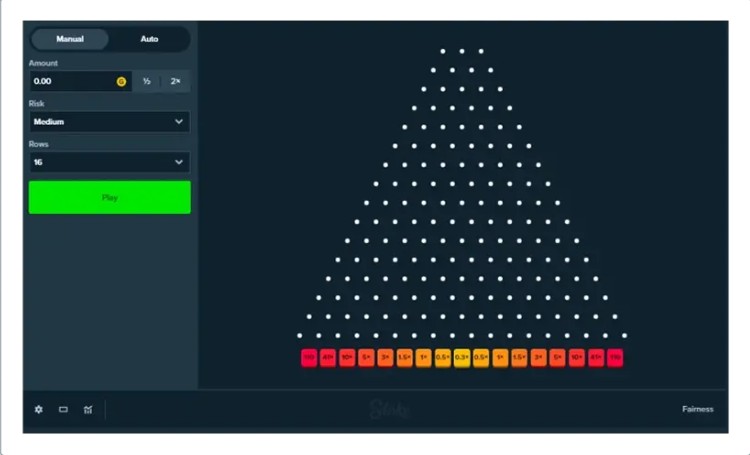
Interest in Plinko is growing in India, and players are increasingly looking not just for entertainment, but also for ways to improve their chances. This is where the Plinko strategy comes into play. Although this game is based on chance, the right choice of settings and bet management can significantly affect performance in long sessions.
To begin with, it is worth paying attention to the basic parameters of the game:
- the number of rows — from 8 to 16, which directly changes the distribution of chances;
- the minimum bet starts at ₹10, and the maximum can reach ₹500;
- multipliers range from ×1.2 to ×100, rarely higher;
- the average session lasts 15–20 minutes, during which you can make up to 60 spins.
Some popular approaches used by Indian players:
- “Step”: increasing the bet by 10–15% after each unsuccessful attempt.
- “Fixed pace”: a constant bet without changes throughout the session.
- “Mix”: alternating risky spins on 16 rows and safe ones on 8.
- “Quick series”: 10 balls in a row in auto mode to collect statistics.
Another useful tip is to set a limit on losses and winnings. On average, experienced Indian players choose the rule “+50% or -30% of the starting bankroll,” after which they take a break. This helps to avoid emotional decisions.
Ultimately, strategу in Plinko do not guarantee victory, but they allow you to control the course of the game. For Indians who value the balance between excitement and discipline, this approach becomes key in long-term sessions. Plinko strategy helps players in India transform the game from chaotic to more conscious. Smart use of rows, bet control, and win and loss limits create not only excitement but also a sense of discipline. Strategies do not eliminate the element of chance, but they set the right pace for the session and allow you to stay interested in the game for longer.
1xBet Tower X: a vertical slot with multi-level possibilities
Among the new slots, one game attracts particular attention. 1xBet TowerX is a game where, instead of traditional reels, a tower of symbols is formed, and with each level, the chances of big wins increase. Indian users especially like this mechanic because it creates a feeling of gradual movement and “construction.”
The key parameters of TowerX are as follows:
- the minimum bet starts at ₹20, which is affordable for most players;
- the duration of one spin is 6–8 seconds;
- at the upper levels, the multipliers reach ×200–×500;
- an autoplay mode is available for 25 or 50 consecutive spins;
- there is a progressive jackpot that increases with the number of bets.
Additional elements that enhance interest:
- a “surprise symbol” with an instant multiplier of ×5 or ×10.
- “Free lifts” after a series of spins.
- “Highest tower of the week” tournaments with leaderboards.
- Festive skins for Diwali or IPL with unique visual effects.
- Easy mode for smartphones with average specifications.
According to surveys, in 2023, more than 25% of Indian players tested TowerX, and most noted it as the most “story-driven” among slots. That is why the TowerX slot from 1xBet is considered a new format of entertainment, combining excitement, visual appeal, and tournament spirit.
1xBet towerX has become an example of how a classic slot can be turned into a real journey. Each new floor of the tower creates anticipation and excitement, while additional bonuses and tournaments increase interest. For Indian users, this game has become a symbol of a modern approach to online slots: a combination of simplicity, brightness, and chances for big multipliers.
So, both Plinko with its strategies and 1xBet TowerX with its multi-level mechanics prove that the Indian gambling market needs formats that combine speed, interactivity, and the ability to control your own playing style. These games not only provide vivid emotions and high odds, but also shape a new culture of online entertainment, where the player becomes the main participant in the process, rather than just an observer.