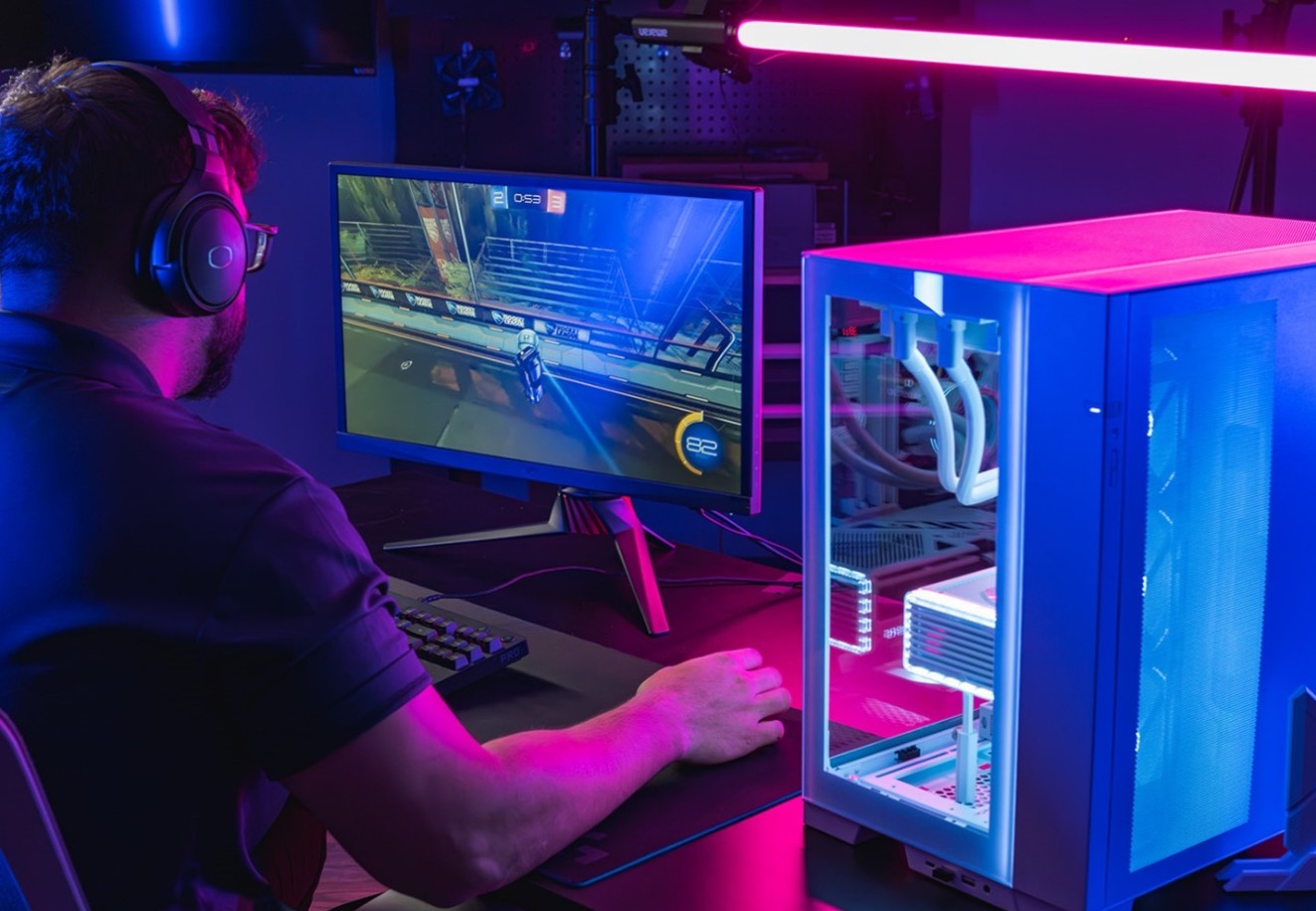
In 2025, gaming has become more immersive than ever before. Whether you’re stepping into expansive open worlds, competing in high-speed racing games, or engaging in strategic battles in multiplayer games, a high-quality gaming experience is a must. But there’s one obstacle that every gamer faces: budget. The reality is, high-end gaming PCs can cost a small fortune, which leaves many gamers wondering if they need to break the bank for a powerful machine. The good news is that you don’t need to spend an arm and a leg to experience top-tier gaming. With the right components, smart choices, and some hands-on assembly, you can build a budget-friendly gaming PC in 2025 that will allow you to enjoy everything from slot games to qq poker games without missing a beat.
Building your own gaming PC can be incredibly rewarding. Not only will you have complete control over every component, but you’ll also gain valuable knowledge about how your system works, which can help with future upgrades. But where do you even start? That’s what this guide is for. We’ll walk you through each step, from picking the right parts to assembling your system. Along the way, we’ll point out common pitfalls to avoid, and we’ll address the key challenges that often trip up first-time builders. By the end of this guide, you’ll have a budget gaming PC ready to go, and you’ll be able to dive into your favorite games—whether you’re looking for the thrill of high stakes in a poker game or the excitement of spinning the reels in a pkv games.
Step 1: Understand Your Budget and Needs
Before diving into the world of PC components, it’s crucial to set your budget and understand what kind of gaming experience you’re aiming for. Are you into graphic-intensive games with cutting-edge visuals, or do you enjoy lighter titles and indie games that don’t require as much power? If your goal is to play AAA games at high settings, you’ll need to allocate a larger chunk of your budget to a powerful GPU (Graphics Processing Unit). However, if you’re more into casual games like slot games or poker games, your requirements will be significantly lower, meaning you can focus on the other components.
At this stage, think about the gaming genres you want to experience most often. Are you constantly deep in multiplayer matches, trying to dominate the battlefield in titles like Call of Duty or League of Legends? Or are you someone who enjoys exploring open-world environments and playing graphically intense games like Cyberpunk 2077? Understanding your specific gaming preferences will help guide your decisions for CPU, GPU, RAM, and storage.
Step 2: Choosing the Right Components
CPU (Central Processing Unit)
The CPU is the brain of your gaming PC, so choosing the right one is crucial. In 2025, there are some great budget options from both Intel and AMD. For a budget build, you might want to consider something like the AMD Ryzen 5 5600X or Intel’s Core i5-12600K. These CPUs offer excellent performance for gaming while keeping costs low. The Ryzen 5, in particular, has become a fan favorite due to its solid multi-threaded performance, which comes in handy not just for gaming but also for multitasking and streaming.
If you’re looking to play games like poker or more basic slot games, a mid-range CPU should suffice. However, if you plan on gaming with heavy AAA titles or you enjoy playing more demanding VR games, you’ll want to opt for a more powerful processor to avoid bottlenecks during gameplay. Always check the compatibility of the CPU with your motherboard before buying, as not all CPUs work with every motherboard.
GPU (Graphics Processing Unit)
The GPU is arguably the most important component for a gaming PC, especially if you want high-quality graphics. In 2025, GPUs from both NVIDIA and AMD offer excellent performance at various price points. For a budget build, the NVIDIA RTX 3060 Ti or the AMD Radeon RX 6700 XT are excellent choices. These cards can handle 1080p and even 1440p gaming at high settings in most titles.
If you’re looking to play casual games like slot games and poker games, you won’t need a top-tier GPU. Most modern integrated graphics solutions, like AMD’s APUs or Intel’s newer chips with integrated Iris Xe graphics, will easily handle these less demanding games. But for the best visual experience in AAA titles and competitive gaming, investing in a dedicated GPU is worth the extra cost.
RAM (Random Access Memory)
For gaming, 16GB of RAM is the sweet spot in 2025. It provides enough capacity for multitasking while gaming, such as having a browser open in the background, streaming, or chatting with friends on Discord. If you’re on an even tighter budget, you could get away with 8GB of RAM, but 16GB will future-proof your build. Look for DDR4 or DDR5 RAM, depending on what your motherboard supports. While DDR5 is faster, it’s also more expensive, so consider whether it’s worth it for your specific gaming needs.
Storage: SSD vs. HDD
Gone are the days of relying solely on slow hard disk drives (HDDs) for storage. Solid State Drives (SSDs) are the norm in 2025, and for good reason—they dramatically improve boot times and load times in games. For your budget gaming PC, aim for at least a 500GB SSD. This will give you fast storage for your operating system and most frequently played games. If you have a larger game library, you can add a traditional HDD as secondary storage to hold less frequently played titles.
Step 3: Finding the Right Motherboard
When it comes to the motherboard, you don’t need to go overboard. Opt for a motherboard that’s compatible with your CPU and has the features you need, such as enough PCIe slots for your GPU, RAM slots, and USB ports. In 2025, there are plenty of affordable motherboards that support the latest processors and RAM. A mid-range motherboard with good build quality will do the job.
Look for motherboards that support future upgrades. You don’t want to be limited down the road if you decide to upgrade your GPU or add additional storage. Motherboards come with different chipsets (such as B550 for AMD or B660 for Intel), so be sure to choose one that supports your CPU’s features and offers enough expansion options for your needs.
Step 4: Choosing the Right Case
The PC case is an often-overlooked component, but it’s essential for airflow and the overall aesthetics of your build. A good case will keep your components cool, even during intense gaming sessions. There are plenty of budget-friendly options in 2025, with many cases offering excellent airflow and cable management features. Some cases even come with pre-installed fans to help with cooling, which is a bonus when building on a budget.
While form factor (ATX, mATX, ITX) is important for compatibility with your motherboard, it’s also worth considering aesthetics. Many cases come with tempered glass panels, RGB lighting, and other features that can make your build look as cool as it performs. But remember, the most important thing is functionality. Prioritize airflow and space for additional cooling if needed.
Step 5: Power Supply and Cooling
The power supply (PSU) is an often underestimated but critical part of the build. Choose a PSU with enough wattage to power your components. For a budget build, 80+ Bronze certified PSUs ranging from 550W to 650W will work fine for most systems. It’s always a good idea to go for a PSU from a reputable brand like Corsair, EVGA, or Seasonic to ensure reliability and efficiency.
When it comes to cooling, most budget gaming PCs will rely on air cooling, which is sufficient for most setups. Be sure to include at least one intake and one exhaust fan to keep your system cool. If you’re playing graphically demanding games or pushing your system to its limits, you may want to consider adding additional cooling options.
Step 6: Assembling Your PC
Now comes the fun part—putting everything together. The process of assembling a gaming PC can be daunting, but with patience and careful attention to detail, anyone can do it. Start by installing the CPU into the motherboard, followed by the RAM, and then mount the motherboard into the case. After that, it’s time to install the storage, GPU, and PSU. Don’t forget to connect all the necessary cables, such as the power cables and data cables. Be mindful of cable management to ensure good airflow inside the case.
Once everything is assembled, it’s time to power up your PC and make sure everything works. Enter the BIOS, make sure the components are recognized, and then proceed to install your operating system. From there, you can install your favorite games, from casual slot games to high-stakes poker games, and start gaming!
Step 7: Optimizing Your System for Gaming
After your PC is up and running, it’s time to optimize it for gaming. Update your drivers, particularly the GPU drivers, to get the best performance. You can also tweak settings in the BIOS for better overclocking performance, but be cautious with overclocking unless you’re familiar with the process. It’s also a good idea to adjust in-game settings to balance performance and visual quality. Lowering settings like shadows, anti-aliasing, and texture resolution can help boost FPS in more demanding games.
Conclusion
Building a budget gaming PC in 2025 is more accessible than ever. With careful planning, smart choices, and attention to detail, you can build a powerful and affordable system that handles everything from the latest AAA games to casual titles like slot games and poker games. By following the steps outlined in this guide, you’ll not only save money but also gain valuable experience in PC building that will last a lifetime. So, what are you waiting for? Get building, and may your gaming experience be smooth, immersive, and most importantly, fun.