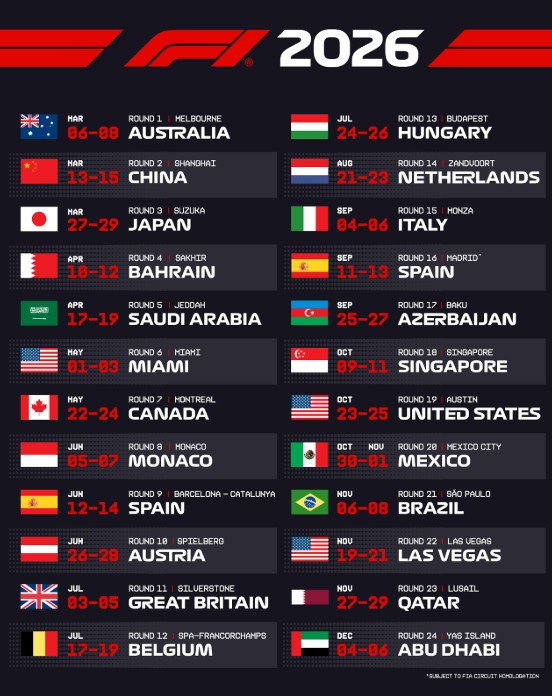
The 2026 Formula 1 season represents a turning point for the sport. New technical regulations, updated power units, and fresh team partnerships have reshaped the competitive landscape. As a result, the F1 standings in 2026 are more than just a list of points. They reflect how well teams and drivers have adapted to the biggest reset Formula 1 has seen in years.
Fans are paying close attention from the very first races. Early results already show that the gap between teams has narrowed. Small advantages matter more than ever. For many followers of the sport, championship progress, race form, and season momentum are tracked closely through platforms such as
https://indian.1xbet.com/en/line/formula-1, where standings and performance trends are updated throughout the season.
How the F1 Standings System Works in 2026
The points system itself remains familiar. Drivers earn points by finishing in the top ten, with 25 points awarded for a win and smaller amounts down to one point for tenth place. A bonus point is still available for the fastest lap, as long as the driver finishes inside the top ten.
What has changed is how difficult it is to score consistently. The new cars behave differently over race distance. Tire degradation is higher. Energy management is more complex. Because of this, finishing every race has become just as important as raw speed.
Constructor standings follow the same principle as before. Teams score points from both cars, which means reliability and balance between drivers are critical. A team with one fast driver and one struggling car will quickly fall behind in the standings.
Why the 2026 Season Feels Different
The 2026 campaign is not simply another year on the calendar. It marks the beginning of a new technical era. Power units now rely much more on electric energy, while fuel usage has been reduced. Several long-standing components have been removed, forcing teams to rethink how they design and operate their cars.
These changes have disrupted the usual hierarchy. Some top teams adapted quickly. Others are still solving reliability and efficiency issues. As a result, the standings show tighter gaps and more movement from race to race than in recent seasons.
Another key factor is the arrival of new manufacturers and partnerships. Audi’s full entry into Formula 1 has added pressure across the grid, while engine supplier changes have created winners and losers before the season even reached its midpoint.
Early Patterns in the F1 Standings 2026
Even in the early part of the season, patterns are beginning to appear. Certain teams perform well across all track types, while others shine only on specific circuits. This creates sharp swings in the standings after each race weekend.
At the front, victories are being shared. No single driver is running away with the championship. Points are spread across multiple teams, which keeps the title fight open. Consistency, rather than dominance, is defining the leaders.
The midfield battle is even tighter. Positions from sixth to fifteenth often come down to strategy calls, safety cars, and tire choices. A driver can jump several places in the standings with one strong weekend, then lose them again at the next race.
Drivers Shaping the 2026 Championship
The standings also reflect different driving styles and experience levels. Veteran drivers tend to score points even on difficult weekends. They manage tires better and avoid unnecessary risks. Over a long season, this steady approach often keeps them near the top of the table.
At the same time, younger drivers are making a strong impact. Many show impressive qualifying speed and aggressive race craft. While mistakes still happen, their ability to challenge established names has added tension to the championship fight.
This mix of experience and youth is one of the reasons the 2026 standings remain so fluid.
How Track Types Influence the Standings
Track characteristics play a major role this season. High-speed circuits reward teams with efficient power units and strong aerodynamic balance. On these tracks, certain cars gain a clear advantage and score heavily.
Street circuits tell a different story. Narrow layouts and limited runoff areas increase the chance of incidents and safety cars. Qualifying position becomes crucial, and race results often look chaotic. These races tend to shuffle the standings more than any others.
Because the calendar includes a wide mix of circuits, no team can rely on one strength alone. Adaptability has become a key factor in staying competitive across the season.
Strategy and Reliability: Hidden Factors Behind the Numbers
Behind every position in the standings lies a strategic story. Tire management has become more difficult under the new rules. Teams must carefully choose between aggressive pace and long-run stability. One wrong call can turn a potential podium into a finish outside the points.
Reliability is another major issue. New engines and electrical systems are still being refined. Mechanical failures and software problems remain part of the season. Every retirement costs valuable points, and repeated issues can end a title challenge before it truly begins.
This is why teams that look slightly slower on paper can still rank higher in the standings. They finish races. They score consistently. Over time, that approach pays off.
Why Fans Care So Much About the Standings
F1 standings are more than statistics. They show momentum. They reveal pressure points. They explain why certain drivers take risks while others drive conservatively.
For fans, standings provide context for every race. A battle for seventh place can matter just as much as the fight for the win if it impacts the championship picture. This is why standings are checked constantly, especially during tightly contested seasons like 2026.
Could the 2026 Title Go to the Final Race?
All signs suggest that the championship could remain open until the very end. Point gaps are small. Multiple teams are capable of winning races. Reliability is still uncertain.
If these trends continue, the final races of the season may decide both the drivers’ and constructors’ titles. That level of uncertainty is rare and valuable for the sport.
Final Thoughts on F1 Standings 2026
The 2026 Formula 1 season is defined by balance rather than dominance. New regulations have reduced the performance gaps that once separated the grid. Every weekend brings change, and every point matters.
As the season progresses, the standings will continue to evolve. Some contenders will fade. Others will grow stronger. What remains clear is that Formula 1 in 2026 is unpredictable, competitive, and deeply engaging.
For fans, that makes following the standings more important — and more exciting — than ever.